Friday, March 15, 2013

Literary Journal #11 - Pagliacci

    Ruggero Leoncavallo's famous opera, Pagliacci, is a great masterpiece of music, literature and play. Although operas are not considered as a major branch of literature, they contain no less factors of literature than other forms of literature. Not only they have stories, they are plays and they are music. Out of many, many operas, Pagliacci is my personal favorite. It is a story of clown, Canio, and his commedia troupe. Canio's wife, Nedda, cheats on him and has affair with another clown Silvio. Driven mad after he found out about the affair, Canio stabs both Nedda and Silvio at the end of the opera.(for details, please visit http://en.wikipedia.org/wiki/Pagliacci) It will be insensitive to compare this work directly to other regular plays, but Pagliaacci is definitely a masterpiece in both literature and music.
 
    I personally feel Pagliacci and Shakespeare's plays have many things in common. One of them is that they both deal with human emotions and relationships that lead their characters into chaos and death. The tragic heroes complete and perfect the stories of humans. The biggest difference seems like Pagliacci is quite Italian. An English man would kill himself before killing his wife for cheating. But probably the reason Italians have made most of the best operas is their rich emotions and unstoppable passion.

    I remember posting a Youtube video of Vesti la Giubba (Put on the Costume) in this blog. It is sung by Canio, after he finds out about the affair. Even though he feels devastated, he still has to prepare for the show. Living as a clown, he has to make people even when he himself is very sad and depressed. Here is another great, great recording by the legendary Mario Lanza.
    Even though I understand new forms of arts have been developed throughout last several decades, I feel very sad not many people write operas anymore. People consider operas only as an antique form of art and don't think they would be fun. Yes, I admit some, no actually many lines in Italians operas are really lame. Often they like to kill their characters for no sufficient reason and talk about love in very vague ways. But everything develops over time. I want to see more operas coming out in the future. They are a perfect form of literature and art. Musicals are good too, but it seems to me operas often deal with more serious human emotions and are more attached to the literature and writings they are based on.

Literary Journal #10 - "Last Words to Miriam" by D. H. Lawrence


Last Words to Miriam


Yours is the shame and sorrow,
       But the disgrace is mine;
Your love was dark and thorough,
Mine was the love of the sun for a flower
       He creates with his shine.

I was diligent to explore you,
       Blossom you stalk by stalk,
Till my fire of creation bore you
Shrivelling down in the final dour
       Anguish — then I suffered a balk.

I knew your pain, and it broke
       My fine, craftsman's nerve;
Your body quailed at my stroke,
And my courage failed to give you the last
       Fine torture you did deserve.

You are shapely, you are adorned,
       But opaque and dull in the flesh,
Who, had I but pierced with the thorned
Fire-threshing anguish, were fused and cast
       In a lovely illumined mesh.

Like a painted window: the best
       Suffering burnt through your flesh,
Undrossed it and left it blest
With a quivering sweet wisdom of grace: but now
       Who shall take you afresh?

Now who will burn you free
       From your body's terrors and dross,
Since the fire has failed in me?
What man will stoop in your flesh to plough
       The shrieking cross?

A mute, nearly beautiful thing
       Is your face, that fills me with shame
As I see it hardening,
Warping the perfect image of God,
       And darkening my eternal fame.


        Maybe this is the reason why so many people dislike D. H. Lawrence. He is not reluctant to say whatever he feels in his mind through his writings. And because he is so attached to the theme of human relationships and shows his agony resulting from them, he is often called a sexist. 
   
        While the poem is constructed with quintets and traditional end rhymes, the theme and the message it carries is quite anti-traditional. Unlike other love poems, Lawrence's use of words and his expressions are extreme and crude. Until it gets to the last stanza, the poem sounds like a complete blame on the narrator's woman, Miriam. I mean, it is pretty unnecessary to name those words or paraphrase the key lines because you can really know what they mean. But once it gets to the last stanza, it becomes clear that the main purpose of the poem is neither blaming Miriam nor discovering the cause of the failure of the relationship, but it is to regret the narrator's inability to continue the relationship, as he puts himself into the position of "shame" and "darken my[his] eternal fame."
 
        To me, D. H. Lawrence is a romanticist rather than a sexist. He is able to throw out his crude emotions on the piece of paper and shape them into order. His genius perfects his poetry in which content and form are united into a finished piece of art. 

Literary Journal #9 - "Piano" by D. H. Lawrence: Can You Repeat the Past?

Piano


Softly, in the dusk, a woman is singing to me;
Taking me back down the vista of years, till I see
A child sitting under the piano, in the boom of the tingling strings
And pressing the small, poised feet of a mother who smiles as she sings.

In spite of myself, the insidious mastery of song
Betrays me back, till the heart of me weeps to belong
To the old Sunday evenings at home, with winter outside
And hymns in the cosy parlour, the tinkling piano our guide.

So now it is vain for the singer to burst into clamour
With the great black piano appassionato. The glamour
Of childish days is upon me, my manhood is cast
Down in the flood of remembrance, I weep like a child for the past.


    One of the most famous works done by D. H. Lawrence, the poem Piano is a masterwork of English Literature. While the theme of the poem, nostalgia, can be considered a cliché, shows Lawrence's unique way of writing and delivering emotions. Not only nostalgia for him is a mere sentimental attachment to the past, but also is an inevitable human condition which is triggered by "an insidious mastery of song" that instigates a battle in his heart.* And finally the soft song of the woman completely destroys the "manhood" of the narrator and "betrays" him. The barriers between past and present collapse, but the narrator comes to his realization that there already has been a huge time gap between the past and the present that he cannot cross. Perhaps the reason he weeps is not because he misses his past, but because he notices the lack of his ability to go back to the past. This makes me recall a famous quote in F. S. Fitzgerald's novel The Great Gatsby.

"You can't repeat the past? ... Of course you can."

    Can you really repeat the past?

    Perhaps you might create the exactly same situation or setting of the past in present. But are the emotions result from it will have same or equivalent degree of value it had in the past? Everyone, at least once in a while, wishes that they could go back good old days. But when you think about what you felt in those "good" and "old" days, you weren't perhaps appreciating the days you were living as much as you would have done now. It seems a little ironic that people, who in these days fast forward five minute commercials on TV and pick up their foods at drive-thru windows, want to rewind their lives occasionally.


*Camacho, Amaranta O. "THE IMAGE OF NOSTALGIA IN “PIANO”, A POEM BY D.H. LAWRENCE." (2012)

Monday, January 7, 2013

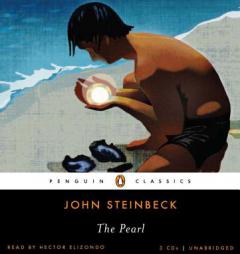
Literary Journal #8 : John Steinbeck's "The Pearl"

The Pearl is a story of a young pearl diver, Kino, who lives and works for his wife and son. One day, his son, Koyotito, becomes sick after bitten by a scorpion, but because he is very poor, he would not be able to bring his son to the doctor unless he sells more pearls. Soon, he finds a giant pearl in the sea. People call it "the Pearl of the World."

The original intention of Kino trying to pay for Koyotito seems to be disappearing. The greedy merchants of the town do not want to as much as the pearl is worth so Kino decides to go to the capital where he will be able to get the best price for the pearl. But it turns out many people in the town have evil plans to steal the pearl from Kino. Thieves come into their house and later it is set on fire. On their way to the capital, Kino and his family encounter trackers who are following them for the pearl and Kino decides to attack them. Though he kills all the trackers, he soon finds out his son Koyotito was shot from the bullet fired from one of the trackers. After loosing their son, Kino and his wife Juana come back to the town and throws the pearl into the sea.

John Steinbeck's look into the marginalized and the powerless of the society make his works masterpieces. While the world's attention is directed towards those who possess fame and wealth, Steinbeck looks at the people who survive each day struggling for their basic needs.

Ignored and persecuted by the rest of the society, the poor always has been left in the corner of the society as miserable outsiders. But when Kino finds "the Pearl of the World," people who have never bothered paying attention to him approach him with greedy plans.

Perhaps, the tragic ending was the unchangeable fate of Kino's family. The pearl, to me, seems like it has two sides: greed and opportunity. Kino's desire to sell the pearl with good price, while in can be seen as a mistake leading to the tragic ending, is understandable. It is the opportunity for him and his family not only to pay for the medical treatment for their son, but also to escape the unfair and loathsome position in their society and live happy live that they deserve.

It is heartbreaking for the readers to see how these people fall and lose everything they have while the greedy others do not seem to lose anything. It almost seems like mother nature tricked them. I mean, it is everyone's wish that good things happen to good people and bad people get some sort of punishment. But it seems like, the world just doesn't work like that way many times. In that sense, Steinbeck's works turn literature into a means of looking into the neglected part of the society with realistic but sympathetic views.

Literary Journal #7 : The Old Man and the Sea

Sea is a source of life. The gifts she gives are endless and infinite. At the same time, sea is violent. When she is having a bad day, she likes to throw her anger at vulnerable men and women.

Sea is a popular literary theme and background. To ancient play writers to 20th century American writers, sea has been a place of mystery where they seek to find the essence of human life. Beowulf had to cross the seas looking for his adventure and Herman Melville found his interest in sea men through "Moby Dick."

Hemingway's "The Old Man and the Sea" is a classic masterpiece. As all of you know, it's a story of an old fisherman catching a giant marlin and losing it to the sharks. What makes this work a masterpiece is its frank and sympathetic view towards the nothingness of human life. Unlike many other novels, "The Old Man and the Sea" doesn't have either noticeable conflicts, except internal conflict of the old man, or complicated plot. Like the name of the book, it is just a simple story of an old man and an incidence he goes through. However, the theme and ideas this book make us reflect on is not that simple.

I saw the old man's solitude and vulnerability in the middle of the sea as a life of every human surviving through his days. Like the old man puts all of his energy left for the marlin, everyday people desperately look for chances of fortune and success. But when they lose things, they eventually realize it is the law of nature that things come and go.

Human life is full of frustration. Because we often don't admit that we are fallible existence, we are dominated by anger and agony when we fail. By the time we suffer enough from the frustration and stress, our life becomes like the old man's wrinkly tough skin.

Sunday, January 6, 2013

Literary Journal #6 : Tuesdays with Morrie

I have always thought this book was so popular that it seemed like a naive topic. I remember when I was in grade school, the book was just translated into Korean language and was bestseller for months. Well, of course I did not read the book back then because I would have not even understood what the book was trying to tell me, but now taking this theology class called Death and Dying (and I am sure there will be hundred more people writing about this book), I was required to read the book. It is not always "fun" to read books that are designated by teachers or courses. And it is even less fun when I have to take a quiz or test based on the reading. But, surprisingly, I actually enjoyed the book. I am not sure if the book is a literary masterpiece that can be compared with Shakespeare or T. S. Eliot, but its content and meaning are no less greater than any other literary work I have encountered.

Morrie Schwartz, a former professor at Brandeis University, slowly dies from a disease called ALS, also known as Lou Gehrig's Disease. While suffering from the terrible pain, he never loses smile on his face. The book is based on a series of dialogues between Morrie and his former student, and the narrator, Mitch Albom.

Death is brutal. It takes away all the good things we have experienced and learned in this world. Sometimes I become skeptic of my own life whenever people around me die. Sometimes it is just hard to understand what I live for and why I put so much of my energy trying to achieve things that I will lose someday. But after looking at Morrie, who doesn't regret or resent his fate, I had a chance to think about my birth, life and death once more in different perspective.

Morrie said "death ends life, not a relationship." I'm not sure if I was supposed to interpret the quote in a religious view point, but I was pretty sure he did not only mean relationship between human beings by saying it. Our relationship with the mother nature is also eternal. And death is only a small part of our worldly life. Death is as intense as our birth. The difference is, we were wet babies during the moment of birth just got out of the mother's womb trying to take the first breathe in, we die taking the last breathe out.

I don't know if there is afterlife or not following our deaths. But listening to Morrie saying "love always wins," I looked back and thought about what kind of life I want to live and I am living. Am I really loving myself? And I realized that I couldn't love anything or anyone else if I fail to love myself.

Literary Journal #5 : Fahrenheit 451

Humans have writing and reading books for thousands of years. Even though books are recognized as excellent sources of information, knowledge and even pleasure, some of them were, and still are banned in some societies. From censorship, political powers have shown their struggle of separating their people from the truth. Ray Bradbury's 1953 novel Fahrenheit 451 depicts a society where reading and possessing books are strictly prohibited. Its fire fighters, instead of extinguishing fires, set books that they find on fire. Making the long story short, Guy Montag, the main character and who is a fire fighter, rejects to follow the society's law and start reading books after he meets a girl named Clarisse. After found out about his "ill acts," Montag runs away from home and the society. Soon after his runaway, a war breaks out and the society is completely destroyed by bombing. And the novel ends with a hint that Montag and his followers who he met while running away will build a new society.

I realize that most of us living in this century are used to taking things for granted. I have no intention of making this post a political journal but this book shows the possible ways our society can be ruined when people do not pay enough attention to the world. Freedom is not a mere romantic word that teenagers look forward to having from their parents or school. While freedom is a right, it is also a responsibility. When people fail to look directly to the truth and make decisions based on composite facts and their logic, freedom is in danger. Look around the world. Notice how many people in different countries are still not able to practice their unalienable rights!

From "Blade Runner"(1982)
The novel also shows how fallible humans can be. Under corrupted powers, it is a matter of time to brainwash the people. Only absorbing the false and fabricated information like dry sponges, the spirit and minds of people become completely subordinate to the government. All the walls are covered with TV screens and people always keep earphones called "Seashells" in their ears separating themselves from the reality.

I heard North Koreans call TV "idiot box." (It is not a slang) But I realize it really make sense to call it that way. Visual impressions are much powerful and lasting than just reading texts. And you really become an "idiot" if you decline to think but just accepts everything that is shown to you on TV.

The book warns us not to be "idiots" of modern society who lost their spirit and logic to the corrupted power.